 |
|
|
|
"We’ll start new projects"
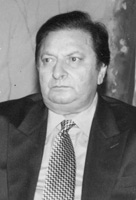
The celebrated Punjabi poet, novelist and politician Fakhar Zaman recently took charge as the chairman Pakistan Academy of Letters (PAL), his second term in office. An intellectual of with a progressive stance, he has authored more than thirty books in Punjabi, Urdu and English winning him Sitara-i-Imtiaz (1994), Millennium Award for best Punjabi writer, Hilal-e-Imtiaz (2008) and Shiromani Sahitik award (2008) by the government of East Punjab, India. Five of his books were banned by the military regime in 1978, a ban that was eventually lifted by the Lahore High Court in 1996. He is the chairman of World Punjabi Congress. As the chairman of PAL he successfully organised the 1995 International Writers Conference – the first of its kind. TNS recently got hold of him to hear his future plans for PAL and hopes for literature and writers. By Abrar Ahmad The News on Sunday: As PAL chairman how would you rate the past work done by the Academy and the areas you intend to address in the future? Fakhar Zaman: Pakistan Academy of Letters is a prestigious institution whose importance, unfortunately, has not been recognised by successive governments. I would not say that it has failed in its objectives. But, yes, a lot more could have been done. I was the Chairman of PAL during the second tenure of Benazir Bhutto. I did my best to make it effective and make it visible internationally. An international conference of writers and intellectuals in 1995, attended by 400 delegates from 110-countries, was also organised for the purpose. Moreover, we published selected Pakistani literature translated into seven languages (six languages of UN and Persian). Resistance Literature written during the military dictatorship of Zia ul Haq, mystic poets of Pakistan and writings of women writers of Pakistan were also translated in the said languages. Five Central Asian poets were also translated into Urdu. We increased financial assistance to the writers. A number of research projects were started. For the first time in the history of the PAL, publications in all Pakistani languages were made because we wanted PAL to represent all the languages spoken in the country. TNS: The academy’s provincial offices present a desolate look, devoid of any meaningful activity. Isn’t it a gross under-utilisation of resouces? FZ: It is true PAL’s regional offices are not up to the mark. They are nothing more than post offices. This time, I have a firm plan to make these provincial offices more effective by allocating more funds so that they can organise seminars and conferences and other functions for the promotion of languages. We are also opening Kitab Ghar at the provincial levels which will display and exhibit PAL publications. We intend to propose to the government publication on no-profit no-loss basis. A number of writers, especially those from small towns, are unable to publish their books on account of financial constraints. TNS: What steps would you take to promote the academy’s role in the promotion of literature in Pakistan? FZ: The complexion of PAL will be of a progressive and enlightened organisation. We shall bring out realistic publications which are closer to real life. A lot of emphasis is being put on the Sufi tradition in South Asia with a plan to publish publications of Sufi movement which is devoted to cultural tolerance, brotherhood and humanism. TNS: The key posts of our literary and educational institutions are being held by manipulative old writers, decades after their retirement. Where are all the young scholars? FZ: I agree that the literary and cultural bodies should be headed by younger scholars with fresh vision and modern sensibility. The writers with a reactionary mindset who cling to these institutions should be removed. But, in my opinion, the most important and foremost thing is to de-bureaucratise the literary and cultural institutions. As long as bureaucracy keeps interfering with those institutions they will lose their progressive character. TNS: The nominees for the prestigious awards are scrutinised through a taxing process but finally the honour goes to the most unexpected authors. FZ: The literary awards which are given by the government nationally go through many processes. There is a lot of room for the selectors to show favouritism and cronyism. As far as Chairman PAL is recommending names for literary awards, I will do my best to forward the names of deserving writers without any bias. TNS: Any new project which would improve the Academy’s image and repute? FZ: We are going to undertake many new projects, some relating to history, for PAL to maintain its image as an active body which brings out thoughtful work, new ideas and a fresh vision. TNS: During Zia ul Haq’s regime, writers were bribed with land. Those against military dictatorship never applied for these schemes. Would these men of integrity be compensated? FZ: The nation takes pride in those writers who stood against Zia’s ruthless dictatorship with integrity and commitment. PAL till now has not paid proper attention to these great writers. I will try that these writers should be compensated in a befitting way. TNS: You announced the establishing a TV channel which is a good idea. But it is generally feared that the same "mafia" would hijack this project too. FZ: I am determined to establish a TV channel and FM Radio at PAL Headquarters, Islamabad. I understand the difficulties in the completion of these ambitious targets I will accomplish it at all costs. TNS: Life insurance scheme seems getting shut for good. It is so? FZ: Life Insurance Scheme has not been closed but slowed down because of internal problems. I assure that during my presence no one in my office will have the audacity to procrastinate. We decided to establish linkages with at least nine countries of the world. We have also decided to translate the foreign literature into Pakistani languages and Pakistani literature will be translated into languages of the countries with which we are going to establish linkages. The News .28-12-2008 |