 |
|
|
|
Review Faiz reassessed Scholars and critics reevaluate Faiz's contribution to Urdu literature
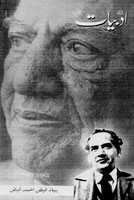
By Abrar Ahmad Adabiyat Editor: Mohammad Asim Butt Publisher: Pakistan Academy of Letters Pages: 312 Price: Rs100 Faiz is one of the major poets of the post-Iqbal era who won an unprecedented applause and recognition. The general influence of his age tended to favour the taste and search for progressive truth in art and literature. By striking a perfect balance between the literary values of poetry and the revolutionary intellectual stance, he created with style and class, which nobody else could ever match. There was a time when his birthday celebrations used to be a memorable literary and socio-political event attracting huge crowds showering their love generously on him. The sweet, mellow penetrating voice of his enlivening poetry and the charisma of his personality overwhelmed the entire literary scene and he still haunts the serious readers of Urdu poetry and would do so in times to come. Adabiyat has recently published a special issue on Faiz -- a worthy serious work. Asim Butt is the editor while Fakhar Zaman, the Chief Editor/Chairman Academy of Letters writes on the editorial page: "Faiz is the most modern ghazal poet who not only influenced the generations to follow but also left lasting impact on the contemporary literature too." Pakistani Tehzib Ka Mustaqbil by Faiz is the opening chapter which in fact is his address to the students of Government College Muzaffarabad 1969, followed by an interview. It helps us understand his perceptions and reservations about the future of Pakistan. One finds him a bit defensive and compromising while replying to some penetrating questions about his ideology -- reflective of the typical mild attitude he kept throughout his life. Valuable contributions are made by the eminent critics and authors including Wazir Agha, Shams-u-Rehman Farooqi, Gopi Chand Narang, Salim Akhtar, Mohammad Ali Siddiqi, Kishwar Naheed and others attempting to unfold the phenomenon called Faiz. Wazir Agha offers a comparison between Ghalib and Faiz -- hardly a tribute to Faiz. He observes that both of them harboured an omnipresent restlessness and lived in the grip of intense sense of non-belonging but Ghalib couldn't move due to financial constraints while Faiz conveniently travelled across the world. Both remained complex and Persian-oriented during their early period -- easing out in the later years. Both remained imprisoned on the "same" charges but for Ghalib it became stigmatic while it glorified Faiz's image. Agha writes that Ghalib maintained the sublimity in his poetry till death while Faiz declined as a poet during the last decades of his life – owing to the disproportionate recognition he got. Farooqi has raised some basic questions about the claims made about Faiz. He contests these claims and by citing a few couplets as example concludes that these offerings neither prove that Faiz was a progressive poet not that he infused new meanings to some obsolete ancient words and metaphors. But one finds him quoting only a few, best suited to his argument while ignoring the entire rest. We may note here that both Agha and Farooqi are the essential "modernists" and can't endorse the credibility of Faiz as a major poet of progressive background, easily. Gopi Chand Narang has examined Faiz's poems in detail and in a sympathetic but objective manner. He begins with the opinion that all great poetry is itself a parameter of excellence. A great poet is either the greatest of any tradition or an inventor of a new one. Either he is ahead of his time or becomes the most forceful representative of his own time. He has to be a rebel. And he finds none of these aspects in Faiz. He doesn't define "rebellion" in poetry while claiming, referring to Faiz's own confession, that he was dragged into the Leftist ideology by Dr Rasheed Jahan, an inference too simplistic and unconvincing. About his diction, Narang concludes that he is nothing but the extension of Ghalib and Iqbal. But after saying all this, he explores the impressive works and discovers some really new brilliant spots in Faiz's poetry. He doesn't deny the significance of the poet but stresses the need to re-visit him with different and more intent critical parameters. Mohammad Ali Siddiqi seems in perfect harmony with Faiz. He points out that Faiz harboured on exceptional quality of utilizing and exploiting his command over Urdu poetic tradition to the extreme advantage of placing his ideology in poetry and did succeed tremendously in giving a totally different face to the traditional vocabulary attaining the status of the most valuable poet todate. Kishwar Naheed candidly recalls the days and nights spent in Faiz's company while Zafar Iqbal insists that Faiz was a 'Ghair Mazahamati Shair' (non-resistance poet). Dr Anwar Sadeed quotes some incidents. Bano Qudsia once asked Faiz, "what's the most difficult task?" Faiz replied, "To love." "And the easiest?" "To be loved," replied Faiz. At another occasion Faiz told Ashfaq Ahmad: "Remember – you are writers and you have a lot to write yet. Don't take to giving knowledge to the reader – give him love. Knowledge, he can acquire from anywhere but he would demand love only from you!" It may be recalled here that during the closing years of his life, Ahmad Nadeem Qasmi assumed quite an aggressive tone against Faiz -- an offensive totally unnecessary. It's interesting to find here that the contemporaries of Faiz are quite calculated and a bit miserly in acknowledging his significance while the younger writers like Fakhar Zaman, Anwaar Ahmad, Ashfaq Salim Mirza, Asad Mufti, Ashfaq Hussain, Ehsan Akbar and Hakeem Baloch have quite generously expressed their immense liking for Faiz. In fact, the admiration reveals that many of them idealised him as a poet and person. It's said that if a man is not ready to die for something, he is not fit to live. Asad Mufti narrates an incident in his article. Faiz was asked by a friend while they gathered at M.D. Taseer's place "Is there anything you are ready to die for?" Faiz responded spontaneously -- "Yes --Inqilaab (revolution.) One feels that Faiz was every inch a poet -- otherwise it's quite hard to achieve and then maintain a standard in poetry of the highest order especially when you intend to serve an ideological purpose as well. We have seen most such poets staggering badly, only to ultimately fall. Faiz when driven to the pen succeeded in converting his rational impulse into creative invention. This could only be possible due to his deep insight and command over the literary tradition along with an intense sincerity of the themes he intended to express. This success is primarily due to the fact that the deepest foundation of his being rested upon his art and ideology both with a firmness which nothing could ever shake. He would assuredly survive in every faithful and honest study of Urdu poetry and would never be humbled in any reference. The News : May 24,2009 |