|
Understanding Balochistan
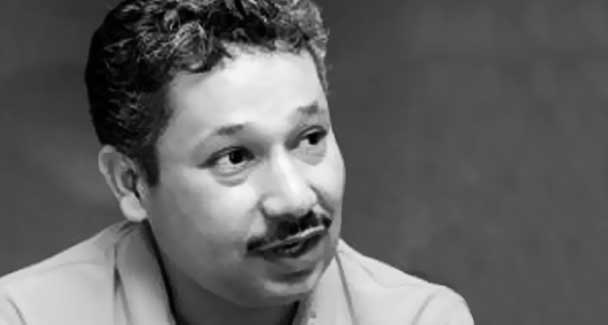
Sanaullah Baloch,
Central Secretary Information of the Balochistan National Party –
Mengal. — File
As tensions flare in
Balochistan and the government alleges foreign involvement in the
nationalist movement there, Dawn.com talks to Sanaullah Baloch, the
Central Secretary Information of the Balochistan National Party –
Mengal.
Your name was placed on the Exit Control List (ECL) and your
brothers were reportedly abducted by the agencies during the
Musharraf government. Have you considered filing charges now that
the judges have been reinstated?
My entire family, including my
parents, was placed on the ECL. Our assets were frozen, my brother
was abducted and kept in an illegal detention centre for six months,
and I was physically attacked by Musharraf’s agents during a
conference in London. My website and 36 other Baloch websites were
blocked by Pakistan Telecommunications Authority.
As for filing charges, several Baloch political parties tried to
file charges against Musharraf, but the country’s institutions lack
the will or courage to accept our plea against him.
You advocate a non-violent, political struggle to accomplish
BNP (Mengal)’s goals, but it was the Balochistan Liberation United
Front that succeeded in pressurising Islamabad…
Unfortunately, our deaf regimes and policy makers are not used to
logical arguments. They only understand the language of power,
force, guns and canons. That is why several resistance movements in
Pakistan have taken on an increasingly violent character.
Unfortunately, this becomes the culture in states governed by
dictatorial regimes.
However, I don’t think that the non-violent aspect of the Baloch
struggle has been nonproductive. Our political struggle, media
campaigns, diplomacy, extensive inquiries on Baloch deprivation and
its expression has widened our support beyond Balochistan and
Pakistan.
In that case, why did you resign from the Senate?
From 2002 to 2006, as an active member of the Senate, I did my best
to highlight the Baloch people’s plight. I was elected by the people
to protect their rights, but we could not stop Islamabad’s assault
on Balochistan. We could not protect the innocent Baloch from
disappearances, torture, displacement and we could not stop our
resources’ unabated exploitation. That is why we decided to quit the
parliament. It is better to be among the people and tell them the
truth as opposed to giving them false hope.
You have previously said that the National Security Council
(NSC) can ensure that Balochistan has greater autonomy over its
resources. But you also emphasise on electoral politics. If the NSC
is the deal-breaker, why bother with political deliberations?
Unfortunately, it is a reality in Pakistan that the corridors of
power are outside the Parliament. The NSC is basically the visible
face of the establishment that consists of civil-military elites.
They approved the military operation against Balochistan and,
without their consent, no political regime can undo their policy of
continued suppression.
In Swat, the government has negotiated a deal with the
Taliban. What message does this give to groups aspiring to a more
autonomous Balochistan?
The establishment in Pakistan has always felt comfortable with
religious groups as they do not challenge the centralised authority
of the civil-military establishment. The demands of these groups are
not political. They don’t demand economic parity. They demand
centralised religious rule which is philosophically closer to the
establishment’s version of totalitarianism.
Islamabad’s elite are stubborn against genuine Baloch demands:
governing Balochistan, having ownership of resources, and control
over provincial security.
Some people believe that Baloch nationalist groups are
materially supported by India in its bid to destabilise the
Pakistani federation. How do you respond to this allegation?
Unfortunately, this has been the culture in Pakistan that all
legitimate political movements against injustice have been labeled
as foreign machinations and leaders of those movements have been
called traitors and agents. Even the credibility of the lawyers’
movement was questioned by the establishment. Human rights defenders
have also been labeled foreign agents. These are old tactics that
all despotic regimes use to undermine legitimate political
movements.
The Pakistan People’s Party (PPP) has promised resolving the
Balochistan issue and President Asif Zardari recently announced a Rs
46.6bn package for Balochistan. Can the government shift the current
Balochistan policy?
I am not optimistic about the PPP’s Balochistan policy. Musharraf
promised and even spent more money to expand Islamabad’s strategic
control over Balochistan. He pumped billions and officially
decentralised corruption at all levels in the province to buy
artificial sympathy, but failed. Millions were spent on media
campaigns to prove that the central government is spending billions
to develop Balochistan, but years of defective policies have further
deteriorated the masses’ lives. Poverty only increased in
Balochistan during Musharraf’s rule. According to one study, rural
poverty in Balochistan increased 15 percent between 1999 and 2005.
The only ‘development’ Balochistan has witnessed during Musharraf’s
rule is the 62 percent increase in police stations.
Meaningful development can only occur if there is political
empowerment, adequate healthcare, educational and employment
opportunities and peace. At this moment, there is no spending in
these sectors.
You have listed eight confidence-building measures that the
federation can adopt to ease political tensions with Balochistan.
Have any been implemented?
No. Displaced people are still living in appalling conditions,
disappearances are still occurring, the military operation has only
intensified and more senior Baloch nationalists are being
intimidated, harassed and killed.
In a more autonomous Balochistan, how might the life of an
average Baloch improve?
Political and economic empowerment will bring positive social
change. It is unfair to blame the Baloch or tribal system for
illiteracy, violations of women’s rights and poverty. How can people
benefit from the existing system when there are more soldiers than
teachers, more military cantonments and naval bases than
universities and colleges, more police stations than vocational
training centres?
In December 2008, a group in Quetta circulated pamphlets
directing women to observe purdah. How will the BNP-M ensure
security and respect for women?
We condemn all kinds of discrimination against women. Historically,
Baloch society has been liberal when compared to other groups
settled in and around the region. We have maintained a moderate
identity since 1920 and have never used religious slogans to gain
public support. However, the establishment has used religious groups
to change Balochistan’s social fabric. There is no restriction and
control on the Taliban in Balochistan, but agencies continue to
intimidate Baloch nationalists.
Some analysts say that Baloch groups have been inconsistent
in their struggle…
I can call it a gap or a pause rather than inconsistency. There has
been suspension in the movement for many reasons. But as compared to
other nationalist movements the Baloch struggle is surviving after
continuous state suppression. Moreover, there are forged nationalist
groups that have recently been created by the agencies to continue
their policy of dividing and ruling.
Instead of always blaming Islamabad, why don’t Baloch
leaders claim some responsibility for the current state of
Balochistan?
There has been no fair opportunity for Baloch nationalists to govern
Balochistan. The first Baloch government headed by Sardar Ataullah
Mengal was toppled in 1973 just before completing nine months. The
second coalition government of Nawab Bugti worked for 18 months. The
third, of Akhtar Mengal, was removed after 14 months. Not a single
Baloch government was allowed to continue for a complete
parliamentary period. That is why we hold Islamabad responsible for
the Baloch people’s plight. Without giving authority to genuine
Baloch leaders, we cannot blame them for the appalling state of
affairs in the region.
(Source:Dawn,Karachi
Thursday, 23 Apr,2009:Interview: Qurat ul ain Siddiqui)
|